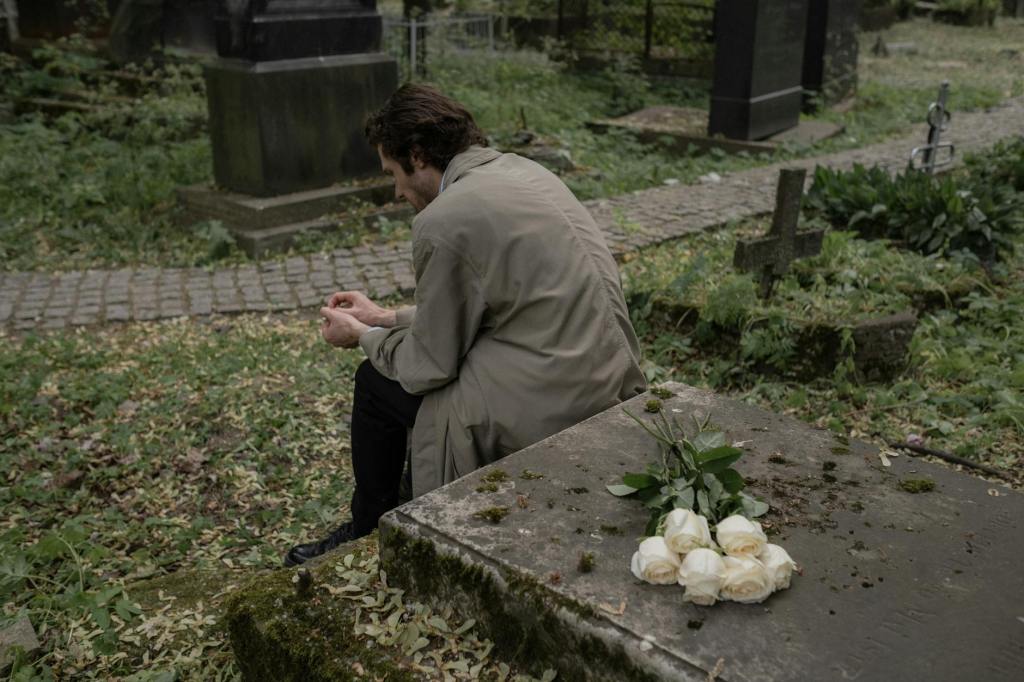
How much time does it take to grieve the loss of a loved one? Is it a uniform measurement of time? Or does it vary by individual?
The answer is neither…because the grief never goes away. At least that’s what I’ve come to realize this past month, as I marked the second anniversary of my mother’s passing. Thinking of her everyday this past month (actually I think about her everyday but more so at this time of year) has made me realize that the hurt never subsides. I don’t even think it’s changed all that much and am still able to feel the same intensity I felt when she died back in 2023. There are days where the pain is even more intense than it was back then.
Many of my thoughts about her are more imaginary, wondering what she would be like if she were alive today and what my relationship with her would be like. I know she would be proud of me, but when I say relationship, I am talking about the friendship I envisioned us having.
As a child, I was definitely a momma’s boy. I was extremely close with her and felt like I could speak to her more about certain things than my dad. Today, I am very close with my dad and know I can go to him with many of these things I once felt too uncomfortable to bring up. That’s because I evolved from child to adult, and with it, so did my relationship and understanding of my dad. He also underwent his own evolution as he watched my brothers and I grow into young men with our beliefs and views. This allowed all of us to build on our relationships with him and vice-versa, creating strong foundations of support and friendship. I remember him saying to me one night, “I wish you could have had a friendship with your mother. It’s a totally different relationship when you’re kids become adults.”
Those words still strike an uneasy cord in my heart strings, because they are true. And as a result, I am mourning not just my mother’s passing but also what never got to be, our friendship. When we are young, our parents have to be parents first, then friends with their kids. They have to teach us how society works, how to be safe and how to get ahead. The reward, hopefully, is that when we are adults, all the door slamming, sass and angry insults we hurled at our parents will have been worth it for them, as they now get to enjoy the strong and rich friendship they hold with us.
Of course, not everyone is a great parent and do not deserve or get that friendship. Others are good but due to various circumstances also do not get to enjoy that benefit as a result of their hard work. My mother falls into that second category. She was a loving mom who made our lunches everyday, helped us with our home work, drove us to theatre rehearsals and sporting practices, took care of us when we were sick and always encouraged us when we were down to get back up and forge ahead with our heads held high.
She deserved a friendship with us but was robbed of that by early-onset Alzheimer’s, which over a 15-year period stripped her of everything that made her the kind, sweet, loveable, strong and caring woman that she was down to a hollow shell. It was painful to watch, and it’s painful now that she’s gone. In many ways, my grief over losing her and not having a friendship with her as an adult started a decade before she past.
Still, I do what she always encouraged me to do, which was persevere and live openly and freely, doing anything I can and want to do. I inherited her zest for life and strive everyday to live mine to the fullest, as she always tried. But still, the grief is there, hanging over me like a cloud, and some days, that cloud is greyer and stormier than usual.
So don’t think there is something wrong with you because you still feel that grief. It never goes away, and it never decreases or subsides. It doesn’t change, but you do, as life forces us to continue on our journeys, facing various challenges and experiencing new phases that change us as a person. In a way, it creates more things for us to concentrate on that help distract or rather take up some of the space in our free time that the grief once held. In other words, the grief is still there but now has to share more room with the other emotions and experiences we go through in life, and it’s impact ultimately changes based on how we adapt and grow as humans.
For this happen, though we must be open to experiencing life after the death of our loved ones. We cannot let it consume us, and we shouldn’t view it as a bad thing, despite how it may make us feel. Grief is an expression of our care for other human beings. It allows us to be vulnerable and let out a lot of emotions that we often are too afraid to show. If we let is in, we can allow it to override our defense mechanisms and let out a lot of the hurt, pain and sadness that we often have trouble expressing. At the same time though, we cannot let it bog us down by refusing to move on with life. We simply have to let it take form and push ahead.
It’s hard to find that ability to balance both of those objectives, and there are days where you may fail at one or the other. But if you keep going, that balancing act does become easier and eventually, second nature. That is how we ultimately survive everlasting grief.

 John R. Fischer
Leave a comment