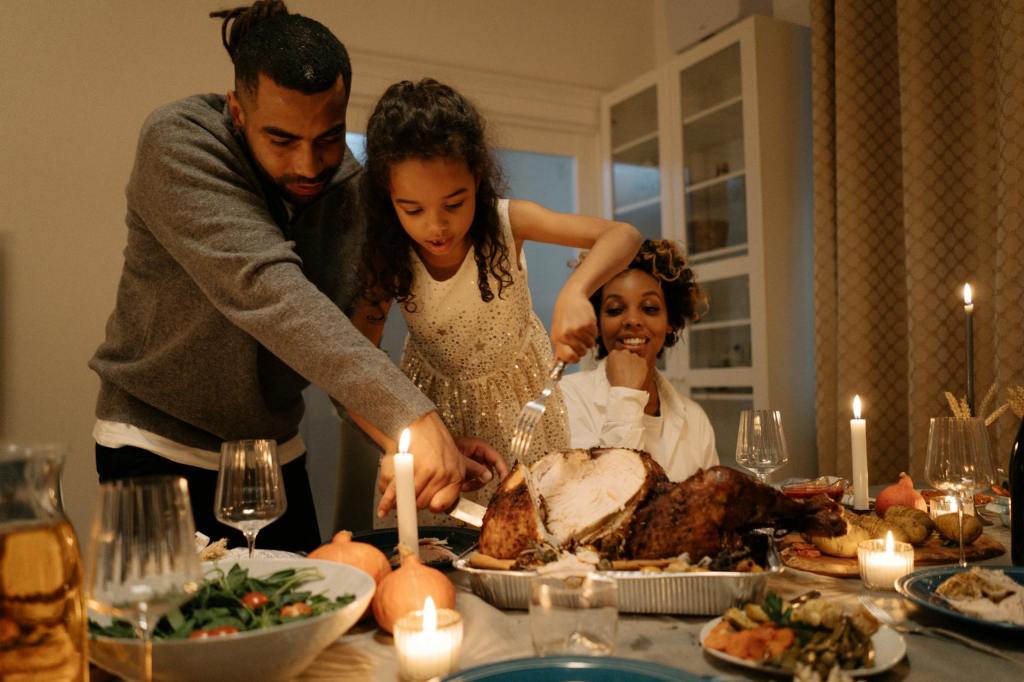
Every year millions of people at the Thanksgiving table say they are most thankful for their families. The sentiment is the most common one mentioned during the holiday season and has been expressed to the point where it has become a cliché of an affirmation. And the reasons are always the same: because they love me, support me, give me advice, care for me, etc.
Now, I’m not knocking those reasons, but I feel as though many people often say them out of habit rather than from the heart. For me, I am thankful for my family for many reasons, including the ones above. But there’s one that stands out to me and has helped me cope with many of life’s challenges, especially with the relationships I have formed in my life.
In my 33 years on this earth, I have encountered countless people who have shared with me horror stories about their families. These include tales of years of abuse under narcissitic and enabler parents and relatives; being the target of daily attacks by drug addicted and alcoholic mothers and fathers; or being disowned and shunned by loved ones simply over one’s sexual orientation, gender identify, or marrying outside one’s regligion or race.
All of these families have a lot in common. They are neglectful, selfish, toxic, harmful, judgemental and disrespectful. But there is one trait they all share that is the cause for all of these other negative characteristics: the inability to put themselves in others shoes.
All of us, myself included, have arguements and disagreements with their families. I can’t tell you how many heated conversations and terse words I’ve traded with my father, brothers, uncles and aunts. It’s human nature to get angry with people you spend a lot of time with. But what distinguishes my family from these others I mentioned above is our ability to sit down for a moment and put ourselves in the other person’s shoes. After some time, we then are able to come back together, sit down, apologize, talk things out and learn from what we did wrong. It somehow makes our bond stronger and has allowed us to more easily communicate to the point where there have been fewer arguements over the last few years.
Unfortunately, in truth, this quality is foreign to many folks. Some are scared of it because they fear being wrong. Others fear being vulnerable to others by opening up. Others feel it is not worth it as they believe the situation will happen again, which may be the case as these fears are the result of past traumas that often do repeat. And that is because of the people around them – parents, aunts, uncles, cousins and siblings – who are unable to do the same. Instead, what they have is a toxic cycle of animosity, selfishness and coldness towards the needs and feelings of others, including those outside of their families.
To give you an example, I overheard my aunt, whom we’ll call P, talking the other night after dinner about two friends of hers. One is a woman we’ll call D and the other was a guy called K. P was friends with K and met D through him. At one point, D got married and lived with her husband above K. She and K were night owls and would love to go out and party. They were like partners in crime. Everything changed though when D got pregnant, and she started staying in and going to bed earlier.
To my aunt P, this was understandable, considering that D was about to become a mom, but K did not get it. He was upset that D was not going out and having fun at the clubs with him like they used to. His personality changed and he became angry, cold and toxic to D to the point where D and her husband ended up finding a new place to live. It broke D’s heart to end this friendship, but she felt like she had no choice. My aunt P would hang out with them separately, and while D respected that her relationship with K was different to the one that my aunt had with him, K did not feel the same. He grilled my aunt about D and would tell her that she had to choose. My aunt eventually told him to call her when he wanted to hang out with her for her rather than to just learn what was going on with D. He never called, effectively ending their friendship.
Whether it’s family or friends, being able to put yourself in another’s shoes is an important skill, especially when it comes to them and their children. Parents who are neglectful and selfish end up setting their kids up for disaster because they are unable to put themselves in their kids shoes, to emphatize and understand their needs. Had K been raised to look at things from the other person’s point of view, he might have been able to recognize and adjust to D’s new responsibilities and lifestyle as a mother and in doing so, avoided losing both his friendships with her and my aunt.
Denial and resistance to change is also a reason why many of us choose not to look at things from the other person’s perspective, as we do not want the ways things are to end. But whether we want them to or not, things change, and there is nothing you can do to stop it. Rather than ask how people could think the way they are doing something is right, stop and take a moment and instead ask what factors in life has led this person to behave this way and how you can adjust to these changes.
But while neglectful and abusive parents often produce children like this, the same situation is also an issue among parents who give their kids too much. A child’s needs are based on being respectful to their emotions while still doing what’s right to discipline the child. Parents who indulge their children too much often do so to avoid feeling uncomfortable themselves, thereby putting their desires for peace and comfort above the need to discipline their child. It’s a balance, and one that every parent falters at from time to time. After all, we are only human.
But not correcting this error allows the imbalance to continue, and the only way to correct it is to put yourself in the child’s shoes both from an emotional perspective and also from a disciplinary one. You are thinking about how to be respectful to your child’s emotions and needs in the moment, while also considering what they will need in the future in terms of their conduct and respect toward others.
Lately, I’ve found that this practice has allowed me to stay present in the moment and allow me not to worry or stress too much about issues that arise with others, including conflict. I find that I am able to emphatize and put myself in others shoes to not just understand where they are coming from but get a better understanding of the situation and why certain people act the way they do compared to me. It’s given me much clarity about the relationships in my life and who I think is a good influence and who is not. It also has allowed me to let go of a lot of pain that others have caused me by being able to understand why it is they act this way and how they react and handle situations. And it has allowed me to rectify challenges I have with friends more easily.
Doing this, however, requires work from both people. If someone is not trying to understand your perspective, then you risk being taken advantage of if you only think of things based on how they view them.
For example, I had two toxic roommates years ago who put me through hell. And while it doesn’t excuse their actions, being able to put myself in their shoes based on what I know about their backgrounds has allowed me to understand why they acted the way they did. At the same time though, the way my family thought me to think of others allowed me to see that the same respect was not being shown back to me, leading me to make the decision to leave and go no contact.
Because of this ability, I have been able to let go of some of the resentment I initially harbored toward them because I realize now that this is the way they are programmed based on their upbringing, and that they are unable to emphatize or consider others in the way I am. At the same time, I was able to recognize that because they could not show me the same respect, they were not good influences to have in my life. It still stings a bit to think of the ordeal, but I take pride in knowing that I got myself out of their and because of my family’s lesson here, I am able to not let it affect my day-to-day life.
People who cannot emphatize with others also cannot communicate, trapping them in a repetitive cycle of failed expectations and poor behavior that often leads to more challenges for them, including legal trouble, as well as loneliness in their later years with no one to love or care for them. Instead, they are miserable and angry. In contrast, those who can put themselves in others shoes often have less challenges and resent others less, leading them to live more fulfilled and happy lives.
So, to my family this Thanksgiving, I would like to give a special thanks for teaching me this lesson, which has and will continue to serve me well. And while I want to remember those who do not have family or friends around them, I also want to take a moment to remember those who are coping with toxic family members like this that are unable to put their loved ones first and simulataneously teaching them to do the same.
The world is already so cruel and full of hateful individuals. Thankfully, talks about expressing one’s emotions and communicating are growing by the day. My hope heading into the next few years is that with more awareness being raised about these challenges, more families will be able to heal and repair their fractured bonds and change for the better.
So, to everyone out there, whether you are with your family, chosen family or alone, I hope you had a restful Thanksgiving and wish you a peaceful holiday season heading into the new year!



 John R. Fischer
Leave a comment